





How Far a Pet GPS Tracker Can Really Track? Range & Accuracy Guide
Every year in the U.S., over 10 million pets are lost, according to the American Humane Association. Some are found quickly. Others vanish without a trace, sometimes just blocks away from home. Now imagine this: Your dog bolts through an open gate, or your indoor cat slips out the window, or you grab your phone, but… will your tracker still work if they’re 10 blocks away? 5 miles? What about 500? Source
That’s where GPS tracker range becomes more than just a spec; it becomes the difference between peace of mind and panic.
In this article, you’ll learn how far a pet GPS tracker can track or work, what affects their range, and how to choose the right one based on where your pet actually goes. Whether your buddy is a backyard napper or a bold explorer, you’ll know exactly what kind of tracker will keep them safe and make you worry-free.
Key Takeaways
- GPS pet trackers can offer unlimited range with a cellular plan.
- Bluetooth trackers only work up to 100 feet, good for indoor pets.
- RF trackers work 1–5 miles but need open space to work well.
- GPS signals may struggle indoors, in forests, or in cities with tall buildings.
- Battery life and update speed affect how well tracking works.
- Pick a tracker based on your pet’s routine and environment.
- Some trackers switch to WiFi or Bluetooth when GPS isn’t available.
- Testing your tracker in real life is the best way to trust it during emergencies.
Average Range of Pet GPS Tracker - Quick Answer

Most pet GPS trackers offer unlimited range, as long as there’s cellular coverage. These devices use GPS satellites and mobile networks to track your pet anywhere in the U.S. (or even globally), depending on your plan.
Bluetooth trackers, on the other hand, have a much shorter range, typically around 30 to 100 feet. They’re great for indoor use or small spaces, but won’t help if your pet runs far.
Radio Frequency (RF) trackers can reach up to 1 to 5 miles, but only in ideal conditions with a clear line of sight. Trees, buildings, and hills can reduce that range quickly.
So if you’re asking “how far can a pet GPS tracker really work?”, the answer depends on the tracking technology and where your pet goes.
What Affects GPS Tracker Range in Real Life

The distance your pet GPS tracker can cover isn’t just about what the brand claims; it depends on a mix of technology, environment, and signal conditions.
Here’s what truly affects how far and how well a GPS pet tracker works:
1. Type of Signal: GPS, Bluetooth, or RF
Each tracking technology comes with its own range and use case:
- GPS + Cellular: Offers unlimited range as long as there’s mobile signal. Great for tracking pets across neighbourhoods, cities, or even states.
- Bluetooth: Limited to 30–100 feet. Works best indoors or in your yard, but not useful for runaway pets.
- RF (Radio Frequency): Can reach 1–5 miles in open areas, but range drops when trees, hills, or buildings block the signal.
2. Cellular Network Availability
Even GPS trackers with “unlimited” range need strong cellular coverage to send real-time updates. In rural zones, mountains, or dense forests, your device may still log the location but fail to send it until the signal returns.
3. Environment & Physical Obstructions
Where your pet goes affects tracking performance:
- Urban Areas: Tall buildings can reflect satellite signals, causing GPS bounce, making your pet’s location jump around or appear slightly off.
- Suburban Areas: Usually ideal for tracking. Good visibility and fewer obstructions allow for strong signal strength and accuracy.
- Rural Areas: Weak mobile coverage may cause dropped connections, especially in remote forests, fields, or mountainous terrain.
- Indoors or Basements: GPS signals often struggle here. Some advanced trackers use WiFi or Bluetooth fallback to improve accuracy, or show your pet’s last known outdoor location until tracking resumes.
4. Battery Life & Refresh Rate
A low battery limits update frequency, or worse, disables tracking completely. Trackers with adjustable refresh rates (e.g., every 30 seconds or 5 minutes) balance between real-time updates and battery conservation.
👉 Set your device to faster refresh if your pet is active or outdoors often.
5. Antenna Strength & Device Quality
Trackers with better GPS chips and internal antennas are more accurate and reliable in tough conditions, like bad weather, dense trees, or near metal buildings. High-end models are more likely to maintain a strong connection across environments.
Pro Tip: Test your pet's tracker in different areas before relying on it in emergencies. Walk around the neighbourhood, go indoors, or explore nearby parks and forests to see how it performs in real-world conditions.
GPS vs Bluetooth vs Radio Trackers: Which Goes the Farthest?

Not all pet trackers are built the same. The range and reliability you get depend heavily on the technology behind the tracker. Here’s how GPS, Bluetooth, and radio (RF) trackers compare in real life.
GPS Trackers (with Cellular):
These offer the longest and most reliable range, virtually unlimited, as long as your tracker has a signal and the device has a data plan. GPS trackers are perfect if your pet tends to roam far or if you want to track across neighbourhoods or even states. According to product experts at Wirecutter and AKC, GPS trackers like TrackiPet, Fi and Whistle are top-rated for both range and accuracy.
Best for: Long-range tracking and real-time location updates.
Downside: Monthly fees and reliance on cellular networks.
Bluetooth Trackers:
These are more like digital leashes. Bluetooth trackers work only within 30 to 100 feet, usually ideal for finding a pet inside the house or yard. They pair quickly with your phone, but once your pet wanders too far, the signal drops.
Best for: Indoor pets or close-range tracking.
Downside: Very limited range, not helpful for outdoor escapes.
Radio Frequency (RF) Trackers:
RF trackers use radio waves to locate your pet and often work without cell service. Some offer ranges of 1 to 5 miles, especially in flat, open terrain. But in real-world use, hills, trees, and buildings can block the signal, reducing effectiveness. Devices like the Marco Polo system are well-reviewed by Consumer Reports for off-grid use.
Best for: Rural or off-grid tracking where GPS signals are unreliable.
Downside: Bulky, less precise, no GPS map.
Real-World Scenarios: How Far Is “Too Far”?

Range on paper is one thing, real life is another. Here's how far a pet GPS tracker can realistically work based on different situations:
Your Pet is in the Yard
If you're using a Bluetooth tracker, this is about as far as it goes, 30 to 100 feet. Great for checking if your dog’s still lounging near the porch.
Escapes into the Neighbourhood
For this, you'll need a GPS tracker with cellular coverage. These can track your pet across blocks or even miles, as long as the area has signal. It's the most reliable option for runaway dogs or adventurous cats.
Lost in a Forest or Rural Highway
This is where things get tricky. GPS trackers may struggle in dense woods or low-signal rural areas. Even RF trackers drop range when trees or terrain block the line of sight. In these areas, signal strength and battery life become critical.
Travelling Across States
Many GPS pet trackers support nationwide coverage, but only if you have an active subscription plan and a SIM card. If your dog jumps into someone’s car and crosses state lines, a GPS tracker like TrackiPet or Tractive can still locate them, as long as the device stays connected and powered.
What Happens When a Pet Leaves GPS Range?

What if your pet runs beyond the GPS signal or cell coverage? Don’t panic, most modern pet trackers are built to handle this situation smartly.
Does the Tracker Disconnect?
Yes, if your GPS tracker relies on cellular networks, it may lose connection temporarily in dead zones or rural areas. But that doesn’t always mean you’re completely in the dark.
Do You Get Alerts or Notifications?
Many GPS pet trackers come with instant alerts when your pet exits a safe zone. This is called geo-fencing. You set a virtual boundary (like your backyard), and if your pet crosses it, you’ll get a notification right away.
Can You Still See Their Last Known Location?
Yes. Most trackers will show the last GPS location before the signal was lost. This can give you a solid starting point if your pet goes missing.
Do Any Trackers Work Offline?
Some trackers store location history on the device itself and upload it once the connection is restored. Others use radio frequency (RF) tech that works even without cell service, although these tend to be less precise and bulkier.
How Accurate Are Pet GPS Trackers?

Most GPS pet trackers are accurate within 5 to 10 feet outdoors, but their precision can drop indoors or in areas with signal interference like tall buildings or heavy tree cover.
Why the Difference?
GPS signals rely on satellites. Outdoors in open areas, your pet’s location is usually spot-on. But indoors, under dense trees, or near metal structures, GPS accuracy drops because the signal gets blocked or bounced.
Standard GPS vs Assisted GPS
Many pet trackers use Assisted GPS (A-GPS), which combines satellite data with cell towers or WiFi to improve tracking speed and accuracy. This is especially useful when your pet moves quickly or in less-than-ideal environments.
Other Accuracy Factors to Know:
- Update rate: Some trackers refresh location every 2 seconds, others every 60 seconds. Faster refresh = more precise location.
- Movement speed: A fast-running dog can move far between updates.
- Obstacles: Buildings, weather, and even your pet’s position (like lying under a car) can interfere with signal clarity.
Long‑Range GPS Trackers for Dogs, Cats & More

Here’s the Long‑Range GPS Trackers for Dogs, Cats & More:
TrackiPet GPS Tracker
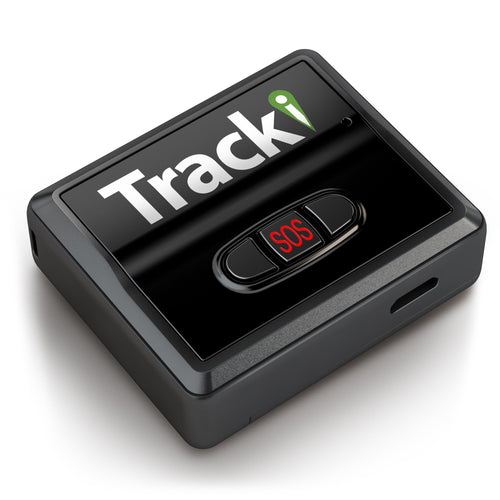
TrackiPet blends GPS, Wi‑Fi, and GSM into one compact, waterproof device (IP67 rating), and includes a global SIM for real-time tracking around the world. With a battery life of up to 5–7 days, depending on update mode, it supports geo-fencing, Chase Mode, and a community-finders network for lost pets.
Tractive GPS Tracker
Tractive provides nationwide unlimited coverage using LTE‑M networks, with ** 6–10 ft accuracy** and fast live tracking when enabled. Real-world users and product experts highlight its reliability, health monitoring, and virtual fence performance. Consumer praise includes helping rescue a dog from 1500 miles away using the app and sound alerts.
Fi Smart Dog Collar
Fi Series 3 and 3 Plus deliver exceptional battery life (up to three months) and excellent LTE‑M signal strength for remote areas. Reviewers cite it as a top choice in tracking devices, noting its AI detection features, durability, and low-maintenance alert system.
Whistle GO Explore
Known for its balanced performance, Whistle GO Explore offers up to 20 days of battery life, real-time updates via AT&T LTE, geofencing, and health tracking. Users and reviewers enjoy its intuitive app and dependable notifications.
Why these three stand out:
- TrackiPet, Tractive, Fi, and Whistle all offer truly long-range GPS tracking with reliable coverage across the U.S. and internationally.
- Each supports geofencing, outreach notifications, and fast location updates for pet safety.
- Battery life varies: Fi leads with months per charge; Whistle offers ~20 days; TrackiPet delivers up to a week based on power mode.
- They each offer unique benefits: Fi for battery efficiency and sensitivity, Whistle for user-friendly health metrics, Tractive for broad health/activity tracking, and TrackiPet for affordability and global SIM inclusion.
For pet caring tools and essentials, from automatic feeders and pet cameras to grooming combs and travel bowls, see PetABC’s Products.
Tips to Maximise GPS Tracker Performance

Want your pet GPS tracker to work when it matters most? Here are 5 simple ways to boost performance and avoid common tracking issues:
1. Use a Tracker with SIM + GPS + WiFi Fallback
The best GPS devices use a mix of technologies, satellite GPS, cellular networks, and WiFi/Bluetooth fallback. This gives your tracker the best chance of staying connected whether your pet is inside, outside, or on the move.
2. Keep the Device Charged
A low battery means slower updates, or no tracking at all. Make it a habit to charge the tracker regularly, especially if your pet is active or spends time outdoors. Some devices send low-battery alerts to help you stay ahead.
3. Adjust the Location Refresh Rate
Most trackers let you set how often they update your pet’s location. Set it to 30 seconds for real-time tracking, especially when your pet is outside or on the run. Slower settings (like every 5–10 minutes) may save battery but reduce accuracy.
4. Test the Range in Real Life
Don’t wait for an emergency. Walk around your neighbourhood or home with the tracker on your pet and test how far it can go before losing signal. This helps you understand its real-world limits.
5. Match the Tracker to Your Pet’s Lifestyle
Is your dog a backyard napper or an adventure seeker? Choose a tracker that fits their routine. For active pets, go for long-range, fast-refresh GPS devices. For indoor cats, Bluetooth or WiFi fallback may be enough.
A little prep goes a long way, so when your pet takes off, your tracker performs exactly as you need it to.
Conclusion
In the end, knowing how far a pet GPS tracker can really track helps you choose the best GPS tracking device for your dog or cat. Whether your pet stays in the yard or runs far, picking the right tracker gives you peace of mind. Think about where your pet goes, the type of signal needed, and how much range you’ll actually use. The right GPS tracker can truly help keep your pet safe, near or far.
FAQs About Pet GPS Tracker Range
Q1: Can I use a GPS tracker for pets without a monthly fee?
Yes, some pet trackers don’t need a subscription, but they may have limited range or features.
Q2: Do pet GPS trackers work internationally?
Some trackers come with global SIM cards and can work in other countries. Check the brand’s coverage area first.
Q3: Is it safe for my dog or cat to wear a GPS tracker all day?
Yes, most pet trackers are lightweight and safe for everyday use, but make sure the fit is comfortable.
Q4: Can a GPS tracker tell if my pet is moving or resting?
Yes, many smart GPS trackers include activity tracking to show if your pet is active or resting.
Q5: How do I attach a GPS tracker to a cat’s collar?
Use a tracker that’s small and clips securely to your cat’s collar, making sure it’s not too bulky for comfort.
Q6: Will a GPS tracker work if my pet is hiding inside the house?
GPS may not work well indoors, but some trackers use Bluetooth or WiFi fallback to still locate your pet.


Most popular products
Waterproof Magnetic Box for GPS Tracker + 3500mAh battery extender

5.0

$38.88$88.88
(Save $50.00)
12-24 Volt to Micro USB Vehicle/Marine power stabilizer and Wiring kit for Tracki GPS Tracker

5.0
$28.88$49.95
(Save $21.07)