



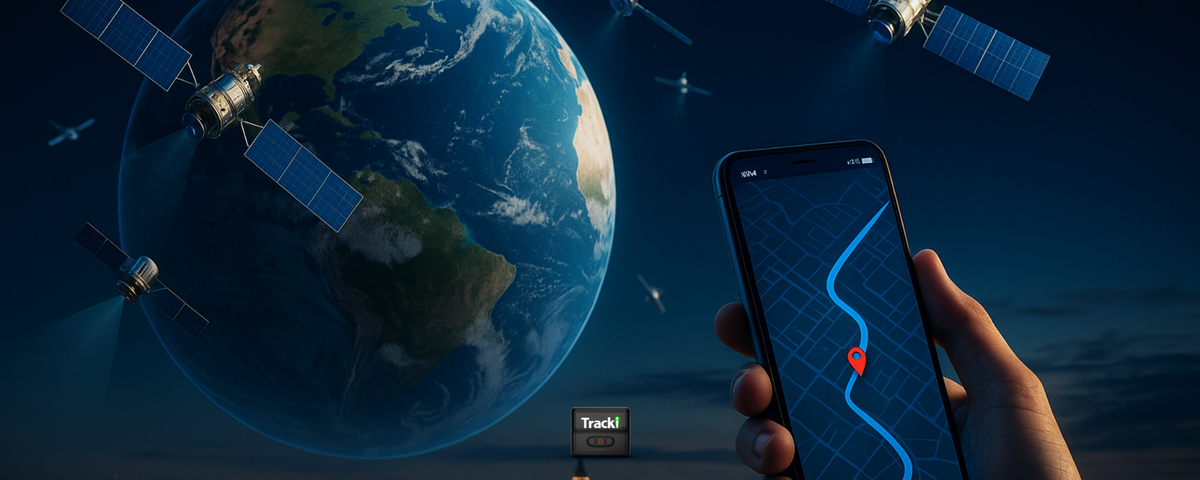


GNSS vs GPS vs GLONASS: What’s the Difference? A Simple 2025 Guide
Every time you open Google Maps to find a coffee shop, track a food delivery, or follow your car’s route, satellites are guiding the way. But here’s the question: are you really using GNSS… or GPS… or maybe even GLONASS? Most people mix them up, and that’s where the confusion starts.
From smartphones and cars to drones, farms, and rescue missions, satellite navigation plays a role in everyday life and critical industries. By the end, you’ll know not only what GNSS, GPS, and GLONASS are, but also why multi-constellation systems are shaping the future of accurate navigation.
In this article, you'll learn a simple 2025 guide to GNSS vs GPS vs GLONASS. We’ll explain each system, compare how they work, and show you why these differences actually matter.
Key Takeaways
- GNSS is the umbrella term for all global satellite navigation systems.
- GPS is the U.S. satellite navigation system with 31 satellites.
- GLONASS is Russia’s system, better for northern latitudes and harsh weather.
- Other major systems include Galileo (EU), BeiDou (China), NavIC (India), and QZSS (Japan).
- Multi-constellation use boosts accuracy, reliability, and safety.
- GNSS powers everyday navigation in phones, cars, drones, farms, and rescue missions.
What Is GNSS? (The Umbrella Term)

GNSS, short for Global Navigation Satellite System, is the universal term used for all satellite navigation systems that provide location, velocity, and time data to users on Earth. In simple words, GNSS is the umbrella that covers every satellite constellation in the world.
This includes well-known systems like GPS (United States) and GLONASS (Russia), along with newer constellations such as Galileo (European Union), BeiDou (China), NavIC (India), and QZSS (Japan). Each system belongs to a country or region, but together they form the global network we rely on for navigation and timing.
GNSS works using a method called trilateration. Satellites orbiting the Earth send signals to receivers on the ground, like your phone or car tracker. By calculating the time it takes for those signals to travel, and measuring distance from at least four satellites, your exact position can be pinpointed anywhere in the world.
In short, GNSS is the backbone of modern navigation. Without it, everyday tools like maps on smartphones, precision farming equipment, aviation guidance, and even emergency rescue operations would not function as accurately as they do today.
What Is GPS? (The U.S. System Everyone Knows)

GPS, short for Global Positioning System, is the satellite navigation system developed and operated by the United States. It was originally built for military use but has since become the most widely used navigation system in the world. Today, GPS operates with a constellation of 31 satellites orbiting Earth, providing global coverage 24 hours a day.
You probably use GPS every single day without even noticing it. It powers smartphone maps, keeps cars and trucks on the right route, helps with tracking devices like fitness watches and GPS trackers, and even guides aeroplanes safely through the skies.
The main strengths of GPS are its worldwide availability, reliability, and accuracy. Most GPS receivers can locate a position with an accuracy of about 3 to 7 meters, which is good enough for everyday navigation, driving directions, and even aviation.
Because it is so widely adopted and integrated into modern devices, GPS is often mistaken for the only navigation system, when in fact it is just one part of the broader GNSS family.
What Is GLONASS? (Russia’s Alternative to GPS)

GLONASS is Russia’s version of a satellite navigation system and is part of the larger GNSS family. It was first developed during the Cold War era as an alternative to the American GPS, ensuring Russia could have its own independent navigation network. Today, GLONASS uses a constellation of 24 satellites orbiting Earth.
One of the unique strengths of GLONASS is its coverage in northern latitudes. While GPS works well worldwide, GLONASS provides better accuracy in regions closer to the Arctic, making it especially useful in Russia and nearby countries.
GLONASS is also known for its resilience in harsh weather conditions and strong performance in places where satellite signals are usually weak, such as urban canyons surrounded by tall buildings.
Although not as widely used globally as GPS, GLONASS plays an important role in providing redundancy and improving accuracy when combined with other systems. Many modern smartphones and GPS trackers now use both GPS and GLONASS signals together for stronger and more reliable positioning.
GNSS vs GPS vs GLONASS – Key Differences
When people search for GNSS vs GPS vs GLONASS, they are usually looking for a quick comparison. Here is a simple table that shows the main differences in definition, satellites, accuracy, coverage, and use cases:
| Feature | GNSS | GPS | GLONASS |
|---|---|---|---|
| Definition | Umbrella term for all satellite navigation systems | U.S. navigation system | Russian navigation system |
| Satellites | 120+ (multi-system) | 31 | 24 |
| Accuracy | 1–3 meters | 3–7 meters | 4–6 meters |
| Coverage | Global (multi-source) | Global | Best performance at northern latitudes |
| Use Cases | Smartphones, drones, fleets | Everyday navigation | Harsh climates, Arctic regions, urban canyons |
Other Global GNSS Systems You Should Know

While GPS and GLONASS are the most recognized names, they are not the only satellite navigation systems. Several other constellations now play an important role in improving accuracy, reliability, and coverage worldwide.
Galileo (European Union)
Galileo is Europe’s independent satellite navigation system, created to reduce reliance on GPS and GLONASS. Unlike GPS, which began as a military project, Galileo is civilian-focused from the ground up. It currently operates with about 30 satellites and delivers very high precision, around 1 meter for public use, and even better for authorized services. Galileo is especially valuable in aviation, maritime navigation, and scientific applications, where precision timing is critical.
BeiDou (China)
China’s BeiDou Navigation Satellite System (BDS) has grown from a regional service into a global network of 35 satellites. The latest version, BeiDou-3, provides worldwide coverage and includes unique features such as short message communication, which allows users to send texts directly via satellite when no mobile network is available. BeiDou is heavily used in transport, logistics, agriculture, and disaster relief across Asia, and is rapidly expanding into global consumer devices like smartphones and vehicles.
NavIC (India)
India’s NavIC (Navigation with Indian Constellation) is a regional GNSS designed to cover India and areas up to 1,500 km beyond its borders. It currently uses 7 satellites and focuses on transportation safety, disaster management, marine navigation, and rural connectivity. NavIC is being integrated into more smartphones, making it increasingly accessible to the public. Its strength lies in disaster alerts and reliable coverage in areas where GPS alone may not be as consistent.
QZSS (Japan)
Japan’s QZSS (Quasi-Zenith Satellite System) is a regional system designed to work with GPS, providing improved accuracy and reliability in the Asia-Pacific region. It uses satellites in highly inclined orbits, which means at least one satellite is always directly overhead in Japan. This design helps reduce signal errors in urban canyons, where tall buildings block or reflect signals. QZSS is essential for autonomous vehicles, precision agriculture, and smart city applications in Japan and surrounding countries.
Why These Systems Matter
Together, these GNSS constellations expand global navigation beyond GPS and GLONASS. Devices that use multiple constellations can achieve faster fixes, higher accuracy, and stronger signals in challenging environments. This multi-system approach ensures that navigation remains reliable for industries like aviation, farming, shipping, and everyday smartphone use.
Why Multi-Constellation Systems Are the Future

Modern devices no longer depend on a single satellite system like GPS alone. Instead, they can connect to signals from multiple constellations at once, an approach called multi-constellation navigation. This advancement is transforming how accurate and reliable positioning has become in both everyday use and critical industries.
Accuracy Boost
The more satellites your device can “see,” the better the accuracy. A traditional GPS receiver might connect to 6–8 satellites, but a multi-constellation device can connect to 20 or more at the same time. This reduces signal errors caused by buildings, trees, or atmospheric conditions. As a result, location accuracy improves to within 1 meter, and with advanced corrections like RTK, it can even reach centimeter-level precision.
Reliability
Relying on just one system can be risky if satellites are unavailable, under maintenance, or jammed by interference. Multi-constellation receivers solve this by switching to another system instantly. For industries like aviation, shipping, or defence, this reliability ensures continuous navigation even during challenging conditions or emergencies.
Applications in the Real World
- Autonomous vehicles: Self-driving cars need extremely accurate positioning to stay safe on the roads. Multi-constellation GNSS provides that precision in real time.
- Precision farming: Farmers use GNSS-guided tractors and machinery to plant and harvest with centimeter accuracy, reducing waste and boosting yields.
- Disaster recovery: In earthquakes, floods, or storms, when communication networks fail, GNSS guides rescue teams with dependable location data.
- Aviation and maritime safety: Airplanes and ships use multiple constellations to navigate safely, even in areas with weak signals or when flying over oceans.
Future Trends
Multi-constellation GNSS is set to become even more powerful when combined with 5G networks and the Internet of Things (IoT). This integration will allow faster data transfer, ultra-low latency, and improved performance in smart cities, connected vehicles, logistics, and robotics. Imagine delivery drones navigating busy skies or driverless taxis safely guiding passengers, all powered by GNSS working seamlessly with next-generation technology.
Real-World Examples of GNSS in Action

GNSS is far more than just a way to check directions on your phone. It powers critical applications that touch daily life, global industries, and even emergency services. By combining signals from multiple constellations, GNSS delivers the accuracy and reliability needed in real-world conditions.
Urban Navigation
In cities filled with tall buildings, satellite signals often bounce off walls or get blocked entirely. This problem, known as multipath error, can make GPS less accurate. Multi-constellation GNSS solves this by pulling signals from multiple systems, reducing errors and improving reliability. This means drivers get more accurate routes, pedestrians avoid wrong turns, and ride-sharing apps can pinpoint pick-up locations with greater precision.
Drones
Drones rely heavily on GNSS to stay stable in the air and follow accurate flight paths. Whether used for package delivery, aerial photography, precision farming, or infrastructure inspections, GNSS ensures they fly safely and efficiently. In farming, drones guided by GNSS can spray crops with exact coverage. In construction, they can map large areas with centimeter-level accuracy. Without GNSS, these operations would be far less efficient and riskier.
Agriculture
Modern farming uses GNSS with RTK (Real-Time Kinematic) technology to achieve centimeter-level precision. Tractors can plant rows perfectly straight, saving land and reducing wasted seeds. Sprayers apply fertilizer or pesticides only where needed, cutting costs and lowering environmental impact. Harvesters guided by GNSS can also maximise yield by reducing overlaps or gaps. For farmers, this precision translates to higher efficiency, sustainability, and profitability.
Search and Rescue
In emergencies, every second counts. GNSS helps rescue teams locate people quickly, whether in mountains, forests, oceans, or disaster zones. Multi-constellation receivers speed up the "time to first fix," meaning rescuers get accurate locations faster, even in areas where signals are weak. For example, during earthquakes or floods, GNSS supports emergency responders by guiding them through damaged infrastructure and ensuring aid reaches those in need.
The Bigger Picture
These examples show how GNSS has evolved into the backbone of modern society. From daily commutes in cities to life-saving missions in remote regions, GNSS ensures accuracy, safety, and efficiency. As more industries adopt multi-constellation systems, their role will only grow in shaping smarter and safer technologies for the future.
Conclusion
In conclusion, GNSS, GPS, and GLONASS are all vital parts of the satellite navigation world. GPS is the most widely used system, GLONASS adds reliability in northern and harsh regions, and GNSS is the umbrella that brings multiple constellations together. With multi-constellation technology and future integration with 5G and IoT, navigation is becoming faster, more accurate, and more reliable, shaping how we live and move every day.
FAQs
Q1. Can my smartphone use both GPS and GLONASS at the same time?
Yes, most modern smartphones are built with multi-constellation chipsets that can access signals from both GPS and GLONASS together. This improves accuracy, especially in cities where tall buildings block signals, giving you a faster and more reliable location fix.
Q2. What is the most accurate GNSS system available today?
Currently, Galileo from the European Union is considered the most accurate GNSS for civilian use. It can deliver accuracy within about one meter, and even better for authorized users. When combined with GPS or other constellations, it provides near centimeter-level precision in some applications.
Q3. How does GNSS help in disaster management?
GNSS plays a vital role in emergencies by guiding rescue teams with real-time location data. It helps map disaster zones, track the movement of aid, and locate victims more quickly. Reliable satellite navigation can save lives during earthquakes, floods, or search and rescue missions.
Q4. Why is BeiDou important outside of China?
China’s BeiDou system provides full global coverage with strong regional performance in Asia. It is widely used for shipping, logistics, agriculture, and smartphones across Asia and beyond. Many devices today already use BeiDou alongside GPS and other systems for better accuracy.
Q5. Is NavIC only useful in India?
NavIC is designed as a regional GNSS covering India and nearby areas. It is especially useful for transportation, disaster alerts, fisheries, and rural navigation. While its main focus is India, international adoption may grow as more devices add NavIC compatibility.
Q6. How will 5G improve GNSS accuracy?
The integration of 5G networks with GNSS will reduce delays in receiving location data and improve coverage in urban environments. This combination will benefit autonomous cars, smart cities, and IoT devices, ensuring faster and more reliable navigation in real time.


Most popular products
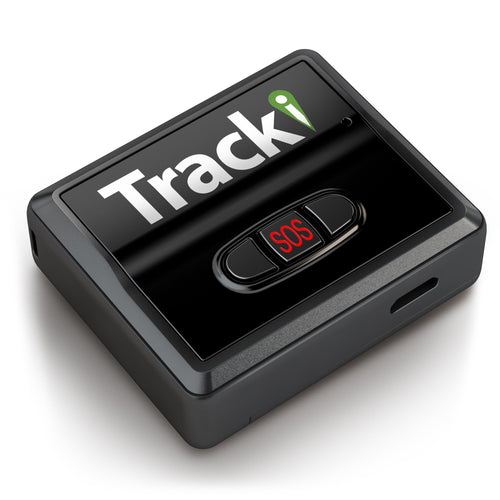
Waterproof Magnetic Box for GPS Tracker + 3500mAh battery extender

5.0

$38.88$88.88
(Save $50.00)
12-24 Volt to Micro USB Vehicle/Marine power stabilizer and Wiring kit for Tracki GPS Tracker

5.0
$28.88$49.95
(Save $21.07)