


You're walking a dog through the park and a stranger stops mid-stride, unsure whether to reach for their phone or step back. That double take is the whole appeal of dogs that look like wolves: upright ears, a thick double coat, pale eyes, and a long, ground-eating trot.
The look is only half the story, though. Many of these breeds were built to pull sleds, patrol borders, or cover miles on their own, and that wiring comes home with them. Below are 11 wolf-like dog breeds, what each one is actually like, and how owners keep these natural wanderers close.
Quick answer
Dogs that look like wolves include the Siberian Husky, Alaskan Malamute, Czechoslovakian Vlcak, Saarloos Wolfdog, Tamaskan, Northern Inuit Dog, Utonagan, Kugsha, Canadian Eskimo Dog, Samoyed, and German Shepherd. Most are domestic spitz or shepherd types. Only the Czechoslovakian and Saarloos wolfdogs were deliberately bred from wolves.
Key takeaways
- Dogs and wolves share more than 99% of their DNA, but most wolf-looking breeds are fully domestic; only two on this list have real wolf ancestry.
- Range, prey drive, and independence show up across almost every breed here, which is why a secure yard matters more than the fence most people start with.
- Wolfdogs are a different legal category from wolf-like dogs, and rules vary widely by state and city.
- A GPS tracker with a geofence doesn't replace training or fencing, but it closes the gap when a determined dog finds a way out anyway.
The Catch: Wolf Looks Usually Come With Wanderer Instincts
Dogs and wolves still share more than 99% of their DNA, according to the American Kennel Club. Thousands of years of breeding made dogs into companions, but the wolf-looking breeds tend to keep more of the working drive.
The AKC describes Siberian Huskies as having strong instincts to roam and seemingly endless energy. The Czechoslovakian Vlcak can be independent and gets bored without plenty of exercise. In plain terms, a lot of these dogs are capable, curious, and very good at leaving.
Three traits show up again and again across this list:
- Range. Sled and patrol breeds were bred to cover distance, so an open gate is an invitation.
- Prey drive. Several breeds will chase a squirrel or cat first and think about recall later.
- Independence. Smart, stubborn dogs learn fences fast, including where to dig and what to climb.
The Fix: Layer Your Safety, Then Add a Live Location
No single tool keeps a determined husky home. Owners who rarely have problems use a few layers that back each other up.
- A fence built for your breed. Taller than you think you need, with a dig guard along the base for breeds that tunnel.
- Recall training from day one. Practice in a long line before you ever trust an off-leash moment.
- ID that stays on. A collar tag with your number, plus a microchip registered to your current contact details.
- Enough exercise to take the edge off. A tired sled dog is far less interested in the gate.
- A GPS tracker with a geofence. You get an alert when your dog leaves the yard, then see where they are right now instead of guessing.
Tracki Pet

Tracki Pet is built specifically for dogs and cats: small enough for a cat collar, IP67 water-resistant, with both a large and small collar attachment in the box.
Plan details
- Price: $22.66 for the device
- Connectivity: 4G LTE CAT1, plus Wi-Fi, GPS, and Bluetooth
- Battery: 500mAh, up to 7 days in power-save mode, 5 days in everyday mode, 3 days in performance mode
- Weight: 0.8 oz (22.7 g)
- Water resistance: IP67
- Service: plan required, from $3.99/mo on a long-term prepay to $9.95/mo month-to-month
- Tracking features: geofence alerts, SOS button, real-time location with 5 years of history
Why not a Bluetooth tag? A Bluetooth-only tag shows where your dog was when a stranger's phone happened to walk past. Tracki Pet shows where your dog is right now, over cellular, even on an empty trail at 6 a.m.
The 11 Breeds on This List
Each entry below covers where the breed comes from, whether it has any real wolf ancestry, and what day-to-day ownership looks like. Weights are typical adult ranges.
1. Siberian Husky
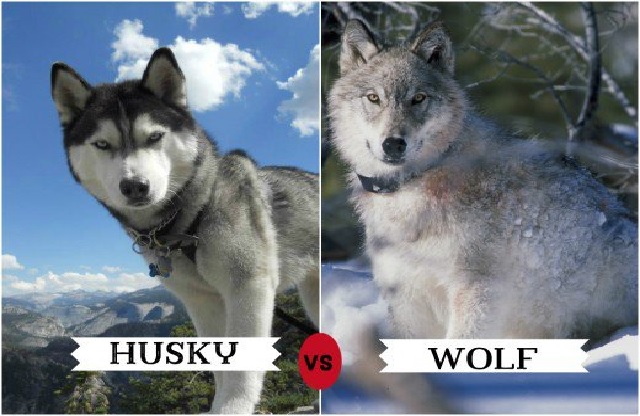
Origin: Siberia | Weight: 35 to 60 lb | Wolf ancestry: No | Best for: active, experienced homes
The Siberian Husky is the breed most people picture first. The AKC notes that Huskies rose to fame as sled dogs after arriving in North America in the early 20th century, and their thick double coat, pointed ears, and facial mask still read as pure wolf.
They're friendly and outgoing, rarely make good guard dogs, and tend to "talk" and howl more than they bark. They also love company, so a bored husky left alone is a husky planning something.
Owner note: Huskies are famous escape artists. A tall fence, a dig guard, and a geofence alert on the yard are worth setting up before the first week is out.
2. Alaskan Malamute
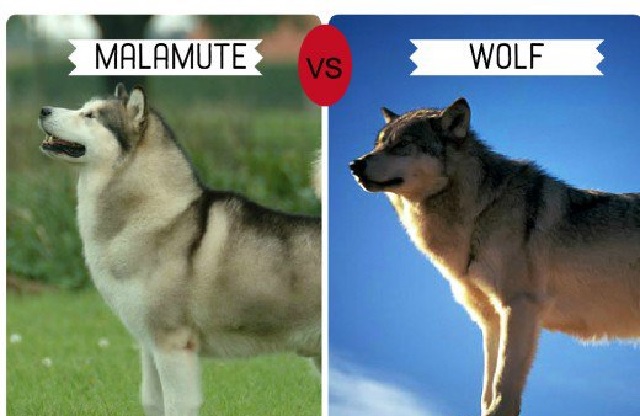
Origin: Alaska | Weight: 75 to 85 lb | Wolf ancestry: No | Best for: experienced owners
The Malamute is one of the oldest Arctic breeds, bred to haul heavy sleds over long distances. The AKC points out that adults can weigh nearly as much as a gray wolf, which makes early training a priority rather than a nice-to-have.
Malamutes are affectionate and loyal but famously stubborn. They shed heavily, especially when they blow their coat each season, and they need a real job or a lot of exercise.
Owner note: Malamutes can be wary of small pets. Introduce cats and small dogs slowly and under supervision.
3. Czechoslovakian Vlcak (Czechoslovakian Wolfdog)
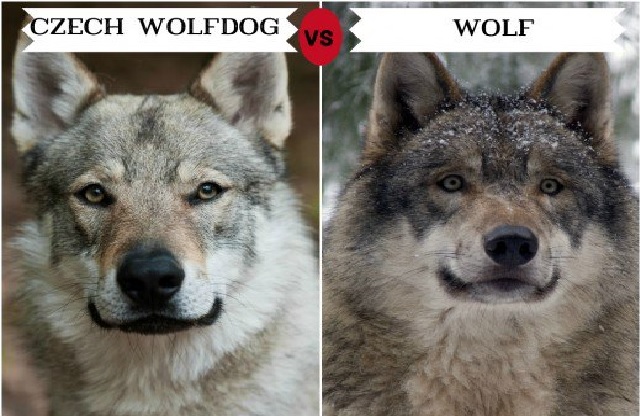
Origin: Czechoslovakia | Weight: 60 to 90 lb | Wolf ancestry: Yes | Best for: experienced owners only
If you want the dog that looks most like a wolf, this is usually the answer. The AKC says the breed was developed in the 1950s by crossing German Shepherd Dogs with Carpathian wolves, originally for military border patrol work. It sits in the AKC's Miscellaneous Class.
Vlcaks are loyal, athletic, and happiest with meaningful work. They can also be independent and reserved with strangers, and the AKC is clear that they're not a good fit for first-time owners.
Owner note: Plan for hours of exercise and mental work every day. Boredom in this breed shows up fast.
4. Saarloos Wolfdog
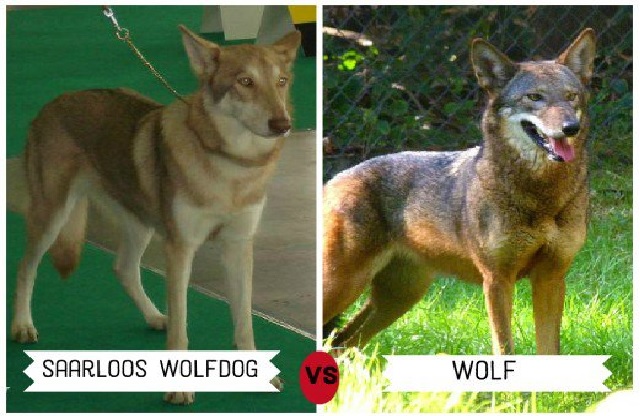
Origin: Netherlands | Weight: 70 to 90 lb | Wolf ancestry: Yes | Best for: experienced owners only
Dutch breeder Leendert Saarloos crossed a German Shepherd with a Siberian grey wolf in 1935. The Dutch Kennel Club recognized the breed in 1975, the FCI followed in 1981, and the AKC added it to its Foundation Stock Service in April 2026.
The FCI breed standard describes it as a companion and house dog rather than a working breed. Owners often describe Saarloos as sensitive and cautious with new people, so early, gentle socialization matters.
Owner note: Not an apartment dog. They need space, routine, and a calm, consistent handler.
5. Tamaskan
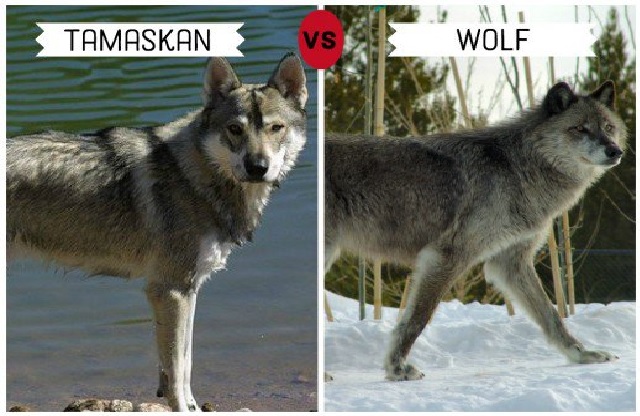
Origin: Finland | Weight: 51 to 99 lb | Wolf ancestry: No recorded ancestry | Best for: active families
The Tamaskan was bred on purpose to look like a wolf. Breeders in the US, Canada, and Finland developed it from sled-dog lines in the 1980s, and it remains rare, with only around 400 dogs thought to exist worldwide.
Despite the name confusion, the Tamaskan has no records of wolves in its line. It's usually friendly and good with families, but it bores easily and needs plenty of daily activity. The Tamaskan is not an AKC-recognized breed.
Owner note: Because the breed is rare, vet any breeder carefully and ask to meet the parents.
6. Northern Inuit Dog
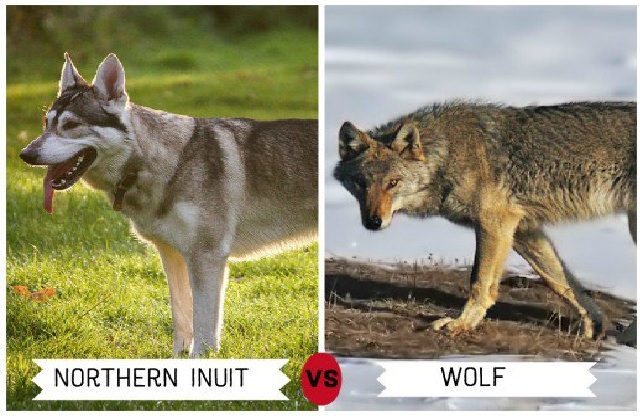
Origin: United Kingdom | Weight: 55 to 110 lb | Wolf ancestry: No | Best for: owners who are home a lot
You've probably seen this breed already. Northern Inuit Dogs played the direwolves in the early seasons of Game of Thrones, and they're 100% domestic despite the look. Breed lines are often described as a mix of husky, malamute, and German Shepherd types.
They're loving and bond tightly with their families, which is exactly why they struggle when left alone. Separation anxiety is a known issue, so they suit homes where someone is around most of the day.
Owner note: Start alone-time training early and build it up slowly, minutes at a time.
7. Utonagan
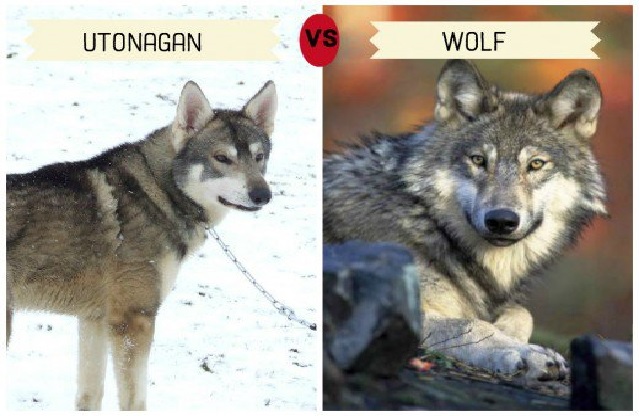
Origin: United Kingdom | Wolf ancestry: No | Best for: a first wolf-look dog
The Utonagan comes from a mix of Alaskan Malamute, German Shepherd, and Siberian Husky, bred to look like a wolf without the wild temperament. Some breed writers rate it as easier to handle than wolf-look breeds that came about by chance, like the Siberian Husky.
Expect a friendly, people-focused dog that still needs daily exercise and a secure yard. Utonagans are not recognized by the AKC.
Owner note: A good pick if you want the look with a slightly gentler learning curve, but it's still a big, energetic dog.
8. Kugsha (American Husky)
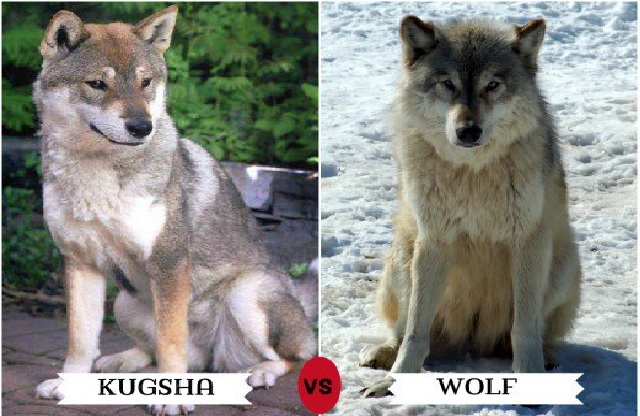
Origin: United States | Weight: 60 to 100 lb | Wolf ancestry: Disputed | Best for: experienced owners
Also called the American Husky or Amerindian Malamute, the Kugsha is a spitz-type working dog developed in Pennsylvania in recent decades. Little is documented about its origins, and sources disagree on whether wolves were part of the original crosses.
Kugshas bond strongly with their owners but are independent, which makes training a long game. They also need a lot of exercise to stay settled.
Owner note: Because wolf content is uncertain, check your state and city rules before bringing one home.
9. Canadian Eskimo Dog
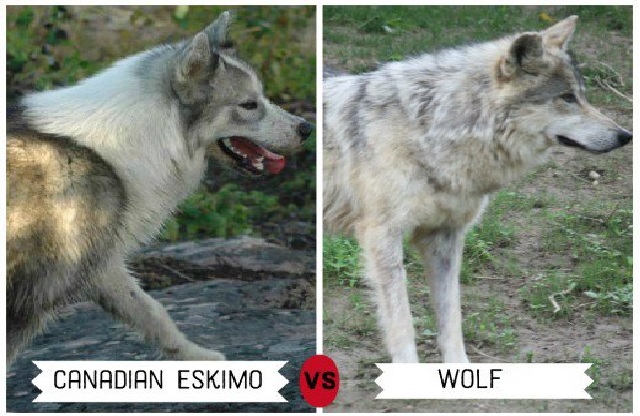
Origin: Canada | Weight: 40 to 88 lb | Wolf ancestry: No | Best for: cold climates, active owners
Also known as the Canadian Inuit Dog or Qimmiq, this powerful spitz breed was the main sled dog in northern Canada before faster Siberian Huskies arrived. That shift nearly wiped the breed out, and it survived thanks to work by the Canadian Kennel Club and dedicated breeders.
They're devoted, tough, and high-energy. Their heavy coat means they're happiest in cool weather and need extra care in summer heat.
Owner note: Strong chase instinct. Keep them leashed or fenced around small animals.
10. Samoyed
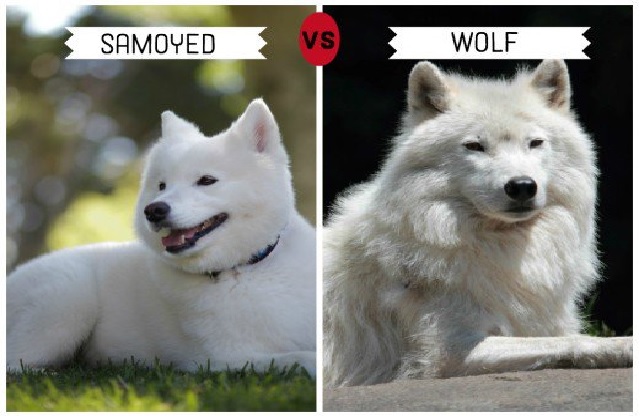
Origin: Siberia | Weight: 35 to 65 lb | Wolf ancestry: No | Best for: families
At first glance, a Samoyed looks like a fluffy white wolf. The breed was developed by the Samoyedic peoples of Siberia to pull sleds and herd reindeer, and the famous "Sammy smile" may have helped keep drool from freezing in Arctic cold.
Samoyeds are among the most family-friendly dogs on this list. The AKC notes they thrive on human company and can develop separation-related behaviors if left alone too long.
Owner note: Budget real time for grooming. That white double coat sheds a lot.
11. German Shepherd Dog
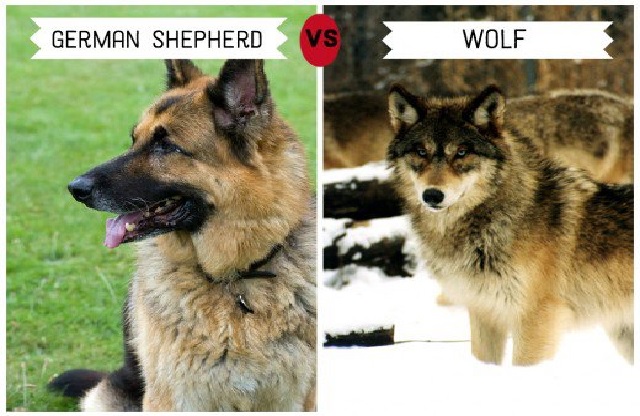
Origin: Germany | Weight: 50 to 90 lb | Wolf ancestry: No | Best for: families who train
The German Shepherd isn't the most wolf-like dog here, but its alert expression and athletic build still hint at its ancestry. It's also the foundation breed for both the Czechoslovakian Vlcak and the Saarloos Wolfdog.
It ranked No. 4 on the AKC's most popular breeds of 2025, and it's widely used in police and search and rescue work. With training and exercise, it's a loyal, dependable family dog.
Owner note: GSDs need a job. Obedience, scent games, or tracking sports keep them settled.
Wolf-Like Dog Breeds Compared
Use this table to narrow the list by size, ancestry, and experience level. Weights are typical adult ranges in pounds.
| Breed | Weight (lb) | Wolf ancestry | First-time owner? | Main care need |
|---|---|---|---|---|
| Siberian Husky | 35 to 60 | No | Challenging | Exercise, escape-proof yard |
| Alaskan Malamute | 75 to 85 | No | Not ideal | Early training, shedding |
| Czechoslovakian Vlcak | 60 to 90 | Yes | No | Work, enrichment |
| Saarloos Wolfdog | 70 to 90 | Yes | No | Socialization, space |
| Tamaskan | 51 to 99 | No records | Possible | Daily activity |
| Northern Inuit Dog | 55 to 110 | No | Not ideal | Company, alone-time training |
| Utonagan | Not confirmed | No | Possible | Exercise, secure yard |
| Kugsha | 60 to 100 | Disputed | Not ideal | Training, exercise |
| Canadian Eskimo Dog | 40 to 88 | No | Not ideal | Cool climate, exercise |
| Samoyed | 35 to 65 | No | Yes, with grooming time | Company, grooming |
| German Shepherd Dog | 50 to 90 | No | Yes, with training | A job to do |
Wolf-Like Dog vs. Wolfdog: What's the Difference?
A wolf-like dog is a domestic breed that simply resembles a wolf, like the Husky or Samoyed. A wolfdog is a hybrid with recent wolf ancestry. The AKC is clear that the two aren't the same thing.
Two established breeds, the Czechoslovakian Wolfdog and the Saarloos Wolfdog, began as deliberate dog and wolf crosses decades ago and are now bred dog to dog. Private hybrids with a wolf parent or grandparent are a different category, both legally and behaviorally.
Are Wolfdogs Legal in the US?
It depends on where you live. There's no single federal rule for wolfdogs, and state laws range from outright bans to permits to no restrictions at all. One 2023 news report citing AnimalWised counted 21 states with unrestricted ownership, 16 with restrictions and 12 plus Washington, D.C. with full bans.
Cities and counties can add their own rules on top of state law. Before you bring home any dog with wolf content, call your local animal control office and get the answer in writing.
How to Choose the Right Wolf-Looking Dog
Answer these five questions honestly before you fall for a photo:
- How many hours a day can you exercise a dog? Under one hour points toward a Samoyed or German Shepherd. Two or more opens up the sled and patrol breeds.
- Is this your first dog? If yes, skip the Vlcak and Saarloos for now.
- Is someone home most of the day? If not, avoid breeds prone to separation anxiety, like the Northern Inuit Dog.
- Do you have cats or small pets? Look for breeds with lower prey drive and plan slow, supervised introductions.
- How secure is your yard? If you can't build a tall, dig-proof fence, choose a calmer breed and add a geofence alert either way.
Conclusion
Dogs that look like wolves are loyal, smart, and unforgettable. Most of them also carry a working dog's urge to explore. Pick the breed that fits your time and experience, build a secure yard, and keep a live location one tap away.
If your dog ever slips out, Tracki Pet tells you where they are right now, so you can head straight there.
Frequently Asked Questions
What dog breed looks the most like a wolf?
The Czechoslovakian Vlcak is usually named as the closest match, because it was developed by crossing German Shepherds with Carpathian wolves. The Saarloos Wolfdog, Tamaskan, and Northern Inuit Dog are close behind.
Are wolf-like dog breeds good family pets?
Some are. The Samoyed and German Shepherd Dog can thrive in family homes with training and exercise. High-drive breeds like the Vlcak and Saarloos are better suited to experienced owners.
Are wolfdogs the same as dogs that look like wolves?
No. Wolfdogs are hybrids with recent wolf ancestry. Most breeds on this list, like the Husky and Malamute, are fully domestic dogs that only resemble wolves.
Do wolf-like dogs need more exercise?
Most do. Huskies, Malamutes, and Vlcaks were bred for demanding work and generally need significant daily physical and mental activity to stay calm at home.
Do all wolf-like dogs shed heavily?
Most northern breeds with double coats shed a lot, especially during seasonal coat blows. Huskies, Malamutes, and Samoyeds are among the heaviest shedders.
How much DNA do dogs and wolves share?
More than 99%, according to the American Kennel Club. That close match is why dogs and wolves can interbreed and why some breeds still look so wild.
How do I stop my husky from running away?
Combine a tall, dig-proof fence, consistent recall training, and plenty of exercise. A GPS tracker with a geofence adds an alert the moment your dog leaves the yard, plus a live location to follow.
Love the wolf look? Plan for the wolf habits.
Tracki Pet tells you where your dog is right now, with a geofence alert the moment they leave the yard, in 190+ countries from a single app.
Find Your Tracker

