


Best GPS tracker for ebike and electric scooter riders in 2026
You lock your e-bike outside the grocery store, and for the next twenty minutes it is out of sight. Most days that is fine. A GPS tracker for your ebike turns "it's probably fine" into something you can simply check: open the app and see where it is, right now.
This guide covers what actually matters when you choose one, how cellular GPS differs from an AirTag, where to mount a tracker on an e-bike or kick scooter, and which device fits which kind of ride.
TrackiMax $24.95, plus plan from $9.95/mo on a prepaid 2-year plan. [VERIFY current pricing]
- 4G LTE real-time location
- Works in 190+ countries
- One app for every device
The best GPS tracker for an e-bike is a 4G LTE cellular tracker that shows live location in an app, alerts you when the bike moves or leaves a set area, and survives rain. A self-powered tracker like TrackiMax (up to 6 weeks per charge, IP68) mounts out of sight without wiring into the bike.
Key takeaways
- A real GPS tracker uses its own cellular connection, so it reports from anywhere with coverage. An AirTag only reports when an Apple device passes nearby.
- Movement alerts and geofences matter more than map accuracy: they tell you something changed before you think to check.
- If you carry your e-bike battery inside, a self-powered tracker keeps working. A wired tracker falls back to a small backup battery.
- Magnets don't stick to aluminum or carbon frames, so plan your mount before you buy.
- Budget for the device and the plan together. The plan is what powers live location and alerts.
How does a GPS tracker for an e-bike work?
An e-bike GPS tracker does three things: it works out its position from satellites, sends that position over a cellular network, and shows it on a map in your phone. Because it carries its own SIM and data connection, it keeps reporting wherever there is cell coverage, whether or not anyone is nearby.
Inside a modern tracker, a few pieces do the work:
- Satellite positioning. Tracki devices read GPS, Galileo, GLONASS, BeiDou and QZSS, which helps in cities where tall buildings block part of the sky. Tracki's datasheet lists accuracy under 5 meters in open sky.
- A cellular connection. The tracker sends its location over 4G LTE through an embedded SIM, so you don't need to buy or manage a SIM card.
- Wi-Fi and Bluetooth assist. Indoors, in a garage or a bike room, satellite signal drops. Nearby Wi-Fi helps the tracker keep a usable fix.
- A motion sensor. The accelerometer notices when the bike moves, which is what triggers a movement alert and lets the tracker rest when nothing is happening.
Check the network before you buy. T-Mobile retired its 2G network on August 3, 2026, after AT&T (2017) and Verizon (2020) did the same, so trackers that depend on 2G no longer connect in the US (Fierce Network). Look for 4G LTE on the spec sheet.
Can you use an AirTag instead of a GPS tracker on an e-bike?
You can, and plenty of riders start there. It just does a different job.
AirTag tells you where your keys were when a stranger's phone walked by. Tracki tells you where your e-bike is right now, anywhere on Earth.
An AirTag has no GPS receiver or cellular connection of its own. It sends a Bluetooth signal that nearby Apple devices relay to Apple's Find My network. In a busy city that often works well. On a quiet street or inside a closed garage, updates can slow down or stop.
Two other details matter for a bike. Because AirTags are built to prevent unwanted tracking of people, an iPhone that travels with an unfamiliar AirTag will show an alert, and the person carrying it can make it play a sound or disable it (BikeFinder). And an AirTag won't send you a message when your bike starts moving.
| Cellular GPS tracker | AirTag | |
|---|---|---|
| How it finds location | Satellites, sent over 4G LTE | Bluetooth, relayed by nearby Apple devices |
| Live updates | Yes, on the interval you choose | Only when an Apple device passes nearby |
| Movement and geofence alerts | Yes | No |
| Phone | iPhone and Android | iPhone |
| Ongoing cost | Monthly or prepaid plan | None |
| Battery | Rechargeable, days to months | Coin cell, about a year |
If you mostly want help finding your scooter in a crowded bike rack, an AirTag is a reasonable, low-cost start. If you want to know the moment your e-bike moves and see where it goes next, you need cellular GPS.
What to look for in an e-bike anti-theft tracker
Most e-bike tracker reviews rank devices by battery life and price. Those matter, but these are the questions that decide whether a tracker actually helps you on the day you need it.
- Real-time cellular connection. 4G LTE with an embedded SIM means the tracker reports on its own, from anywhere with coverage.
- Movement alerts that reach you fast. Push, email or text, whichever you actually notice. An alert is what turns a tracker from a map into a warning.
- Geofences for the places you park. Draw a zone around home and work, and get told when the bike leaves it.
- A battery you can live with. Battery life depends on how often the tracker reports. SafeWise's testing of the original Tracki saw anywhere from three to 30 days depending on update frequency (SafeWise). Pick a device whose realistic range fits your charging habits.
- Real weatherproofing. IP67 handles brief submersion. IP68 handles longer exposure. Bikes and scooters live outdoors, so look for a rating, not the word "water resistant".
- A mount that suits your frame. Many e-bike frames are aluminum or carbon, and a magnet won't hold on either. You'll need a pouch, bag, bracket or strong adhesive instead.
- It keeps working when the e-bike battery comes off. If you take your battery inside at night, a tracker powered by that battery loses its main power at exactly the wrong time.
- A clear total cost. Add the device price and the plan together, and check how cancellation works before you buy.
- One app for everything you track. If you also track a car, a bag or a family member's device, one account saves you juggling apps.
The best GPS trackers for e-bikes and electric scooters
For e-bikes and scooters, Tracki recommends two devices. The right one depends mostly on the size of your ride and how often you want to charge.
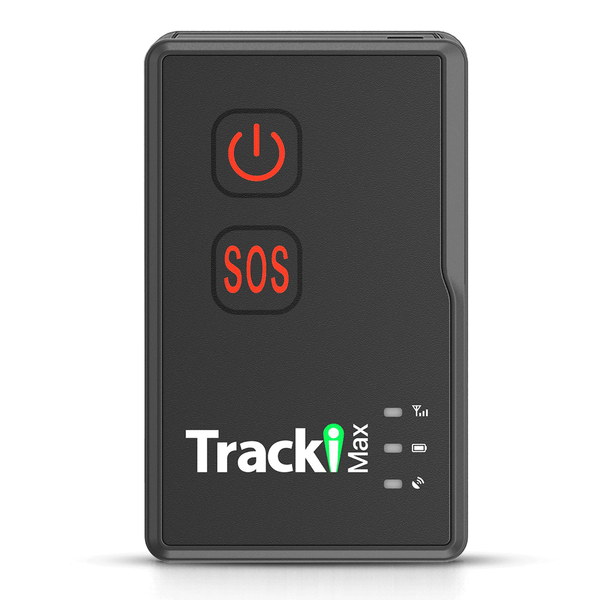
TrackiMax
Charge it every few weeks and forget it's there.
$24.95 plus plan, from $9.95/mo [VERIFY]
- Up to 6 weeks per charge, depending on how often it reports.
- Small enough for a saddle bag, frame bag or scooter stem bag (60 x 37 x 20 mm, 55 g).
- IP68 sealed for rain, spray and puddles, and rated from -4 to 140°F.
- Movement, speed and geofence alerts by push, email or SMS.
Cancel anytime in the app, keep the device. [VERIFY]
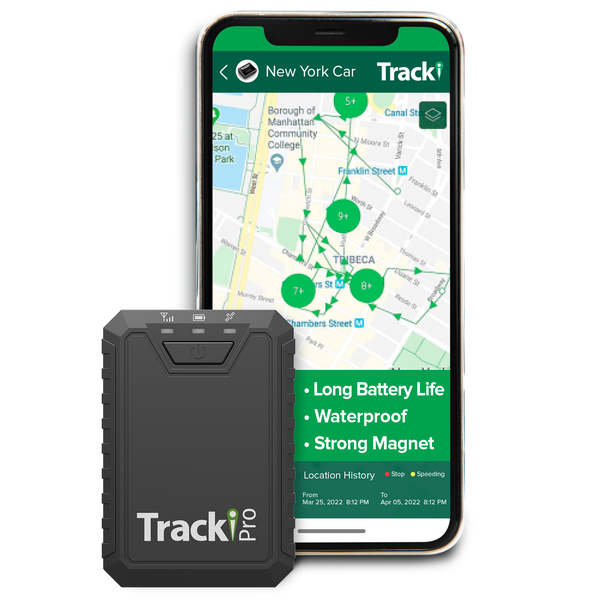
TrackiPro
Charge it about once a year.
$28.99 plus plan, from $9.95/mo [VERIFY]
- Up to 12 months per charge, depending on how often it reports.
- Fits a cargo box, rear crate or the under-seat space of a moped-style scooter (90 x 63 x 34 mm).
- IP68, with a strong magnet, mounting plate and 3M adhesive tape in the box.
- A good fit for a bike that sits in a garage or storage unit for the winter.
Prefer to pay once? See TrackiPro with 12 months of service included.
TrackiMax or TrackiPro: a quick way to decide
| TrackiMax | TrackiPro | |
|---|---|---|
| Best for | Commuter e-bikes, folding e-bikes, kick scooters | Cargo e-bikes, mopeds, seasonal storage |
| Battery | Up to 6 weeks | Up to 12 months |
| Size and weight | 60 x 37 x 20 mm, 55 g | 90 x 63 x 34 mm, 240 g |
| Waterproofing | IP68 | IP68 |
| Mounting | Clip or magnet | Magnet, mounting plate, adhesive |
| Device price | $24.95 plus plan | $28.99 plus plan |
Battery figures are "up to" and depend on reporting frequency and cellular conditions.
Other options worth knowing about
A self-powered tracker isn't the only route. Depending on your bike, one of these may suit you better, and it's worth knowing the trade-offs.
E-bikes with tracking built in
Some e-bikes now ship with 4G and GPS. Aventon, for example, sells connected models with remote tracking, geofencing and anti-theft alerts starting at $1,599 (Aventon). If you're still shopping for a bike, check whether the model you want already includes it, and what the connected service costs after any trial.
Motor-integrated trackers
Trackers like PowUnity BikeTrax install inside the motor area and draw power from Bosch, Shimano, Brose or Yamaha systems (PowUnity). They're very discreet, but installation is more involved and model-specific.
Hardwired trackers without a monthly fee
Some trackers wire straight into the e-bike or scooter power system and include a lifetime SIM. SIZZAPP's nova, for example, accepts 10 to 97V and advertises no monthly fee (SIZZAPP). You'll be splicing into your bike's wiring, so check how that affects your bike's warranty first.
Bluetooth tags
AirTag and similar tags are cheap and have no plan. As covered above, they're item finders rather than live GPS.
E-bike and scooter tracker types compared
| Type | Example | Live location | Power | Install | Ongoing cost | Best for |
|---|---|---|---|---|---|---|
| Self-powered 4G tracker | TrackiMax, TrackiPro | Yes | Own rechargeable battery | Minutes, no tools | Plan, monthly or prepaid | Most riders, anyone who removes the e-bike battery |
| Built-in connected e-bike | Aventon 4G models, Bosch ConnectModule | Yes | E-bike battery | Comes with the bike | Varies by brand [VERIFY] | Buyers choosing a new e-bike |
| Motor-integrated tracker | PowUnity BikeTrax | Yes | E-bike battery, plus backup cell | Model-specific, often a shop job | Data plan after the first year [VERIFY US pricing] | Owners of Bosch, Shimano, Brose, Yamaha motors |
| Hardwired tracker | SIZZAPP nova | Yes | E-bike or scooter battery, plus backup | Two wires into the power system | Advertised as none | Riders comfortable with wiring |
| Bluetooth tag | Apple AirTag | No, crowd-relayed | Coin cell | Seconds | None | iPhone users who want a low-cost finder |
Battery-powered or wired: which is right for your ride?
Choose a battery-powered tracker if you want a two-minute setup or you take your e-bike battery inside. Choose a wired tracker if you never want to charge it and you're comfortable working with your bike's electrics.
There's one detail most guides skip. Campus and city police commonly advise taking your e-bike battery with you when you park, because a bike without a battery is far less appealing to steal (UW Police). That's good advice, but it means a tracker wired to that battery is running on its backup cell whenever you follow it. One motor-integrated tracker's retailer lists up to three weeks of standby from its backup battery (Ciclo Ebikes). A self-powered tracker doesn't depend on the bike at all.
| Battery-powered | Wired | |
|---|---|---|
| Setup | Charge, activate, mount | Connect to the bike's power, route cables |
| Charging | Every few weeks to once a year | Rarely or never |
| When the e-bike battery is removed | No change | Runs on backup battery |
| Move it to another bike or scooter | Easy | Rewiring needed |
| Warranty considerations | None, nothing is opened | Check with your bike's maker |
Where to mount a GPS tracker on an e-bike or electric scooter
The best spot balances two things: the tracker needs a view of the sky through something other than metal, and it should be out of sight from a quick look. Here's how that plays out on different rides. For a step-by-step walkthrough, see our guide to installing a GPS tracker on a bike or motorcycle.
On an e-bike
- In a saddle bag or under-seat pouch. Easy to reach for charging and out of the rain. Use a pouch that closes firmly so nothing works loose on bumpy roads.
- In a top-tube or frame bag. Fabric doesn't block the signal, and a bag already looks like it belongs.
- Inside a rear rack trunk or cargo box. The natural home for TrackiPro on a cargo e-bike.
- Avoid sealing it inside a metal tube. Metal all around the tracker weakens both satellite and cellular signal. Tracker makers note the same drop in signal (AirBolt).
On an electric kick scooter
- A small stem or handlebar bag is the simplest option and easy to move between scooters.
- Under a deck or stem cover can work on some models if there's room and the cover is plastic. Check your scooter's manual before opening anything. [VERIFY model guidance]
- On a moped-style scooter, the under-seat storage bay is roomy and dry, which suits TrackiPro.
Test before you commit
- Charge and activate the tracker, then set it on the bike in your chosen spot without fixing it.
- Ride a normal route for ten minutes.
- Check the trail in the app. If the line follows the road, the spot works. If it jumps around, try a less enclosed place.
- Secure it once you're happy, and check it after your first few rides.
A 10-minute setup that makes your tracker useful
A tracker that's switched on but not set up is just a dot on a map. These six steps are what turn it into something that tells you when it matters.
- Name the places you park. Add "Home" and "Work" (or "Campus") so alerts read like plain language rather than addresses.
- Draw a geofence around each one. You'll get told when the bike leaves, and you'll see it arrive.
- Turn on movement alerts for the hours it should be still. Overnight and during your work day are the obvious windows.
- Pick an update interval that fits your battery. Faster updates use more power. Start with the default and adjust after a week.
- Set a charging reminder. A recurring calendar note is enough. The app also tells you when the battery is getting low.
- Record your serial number. Photograph it and register the bike with Bike Index, which police recommend so a recovered bike can find its way back to you (UW Police).
A tracker works alongside a good lock, not instead of one. Keep using a solid U-lock, lock to something fixed, and take your battery with you when you can.
If your e-bike moves when it shouldn't
The alert arrives, and the app shows your bike three streets from where you left it. Here's what to do next.
- Check the live location and the last-hour trail to see where it is and which way it's heading.
- Switch to faster updates for now, if your plan allows it.
- Contact your local police and tell them you have a live GPS location. You can share the location from the app.
- Let the police handle recovery. Don't try to get the bike back yourself. [VERIFY wording with Legal]
- Keep the trip history. It's a useful record for a police report and for your insurer. [VERIFY: confirm with insurers before claiming any claim or discount benefit]
For families and small fleets
A family e-bike your teen rides
Plenty of families share an e-bike with a teenager for school runs. A tracker on the bike tells you it arrived at school and got home, and a geofence around the school saves you from checking. Tell your teen the tracker is on the bike and why. It works best as an arrangement you've both agreed on.
Delivery and rental fleets
If you run e-bikes or scooters for deliveries or rentals, one Tracki account can manage many devices, each with its own plan, so every vehicle sits on one map with its own history and alerts. Tell your riders the vehicles carry trackers and what the data is used for. Read how GPS tracking helps small businesses, or book a fleet demo.
What does an e-bike GPS tracker cost?
Expect two costs: the device, and a plan that pays for the cellular data behind live location and alerts. Tracki devices for bikes and scooters cost $24.95 (TrackiMax) or $28.99 (TrackiPro). Plans get cheaper per month the longer you prepay.
| Plan (1-minute updates) | Price | Works out to |
|---|---|---|
| Month to month | $19.95/mo | $19.95/mo |
| 6 months prepaid | $99.60 | $16.60/mo |
| 1 year prepaid | $167.40 | $13.95/mo |
| 2 years prepaid | $239.40 | about $9.98/mo |
Source: Tracki help center. Faster update intervals cost more. [VERIFY current US plan prices and "from $9.95/mo" floor before publishing]
Your plan is what powers live location, movement alerts and geofences anywhere you ride. That's the part an AirTag or a one-time tag can't do. If you'd rather not think about a monthly bill, a device with a year or two of service included is the simplest route. Cancel anytime in the app and keep the device. [VERIFY cancellation terms]
One account for everything you track
Your e-bike, your car, a bag on a trip, a device your kid carries: they all sit in the same app, on the same map, with their own alerts.
Shop TrackiMax[INSERT a real, verified customer review from an e-bike or scooter owner, with permission. Do not fabricate.]
[Customer first name, city, review date]
Frequently asked questions
Some do. A growing number of e-bikes ship with 4G and GPS, usually on higher-priced models, and systems like Bosch's ConnectModule add it to supported bikes. Most e-bikes don't, so an aftermarket tracker is the common choice.
Yes, but it only reports when an Apple device passes nearby, it doesn't alert you when the bike moves, and it works with iPhone only. A cellular GPS tracker gives you live location and alerts from anywhere with coverage.
Somewhere out of sight that isn't fully enclosed in metal: a saddle bag, frame bag or cargo box works well. Test the spot on a short ride and check the trail in the app before you fix it in place.
Real-time cellular trackers need a data plan, either monthly or prepaid. A few hardwired trackers bundle a lifetime SIM into the device price. Bluetooth tags have no plan because they don't use cellular data.
It depends on the device and how often it reports. TrackiMax lasts up to 6 weeks per charge and TrackiPro up to 12 months, with faster updates using more power.
Yes, if it's battery-powered. A self-powered tracker moves between rides in seconds. A wired tracker would need to be reconnected each time.
Tracking your own e-bike or scooter is generally legal in the US. Tracki is designed for your own property, or for someone in your care who knows the device is there, such as a teen who rides the family e-bike. Never use a tracker on someone without their knowledge. [VERIFY with Legal]
Know where your ride is, from anywhere
The right GPS tracker for your ebike is one you'll actually keep charged, mounted where it can see the sky, with alerts set for the hours your bike should be still. For most e-bikes and scooters, that's TrackiMax. For cargo bikes, mopeds or a bike in winter storage, TrackiPro's year-long battery makes more sense.
TrackiMax $24.95 or TrackiPro $28.99, plus plan from $9.95/mo on a prepaid 2-year plan. Cancel anytime, keep the device. [VERIFY] New to Tracki? See how to use your tracker or the setup videos.
Tracki is for tracking your own property, or a person in your care who knows they carry the device. [INSERT link to Responsible Use page once live]


